For many companies using liquid filling machines, a rapid increase in demand means they have to speed up production. However, growing global competition means they must achieve this while facing pressure to reduce costs. One way to navigate this problem is with Programmable Logic Controllers (PLCs).
These systems help businesses reduce costs and increase output without sacrificing product quality or making huge investments. The beauty of PLC modules is that they are easy to program and work with most existing machines, helping businesses make automation more accessible to production lines.
What are Programmable Logic Controllers?
A programmable logic controller is simply an industrial computer designed to automate and control production lines. PLCs are extremely flexible and suit many different applications, controlling a single process, a machine, a group of machines, or even the entire production line. They replace control systems including timers, relays and counters, with solid-state components and pre-programmed instructions.
Although PLCs are available in a huge array of types and varying complexity, they all include fundamental components at their heart:
- CPU module
- Power supply
- Programming device
- Input / Output (I/O) modules
- Human Machine Interface (HMI)
With these, it is easy to program different variables, such as container size, filling pressure, and filling rate.
How Do PLCs Work?
A PLC receives several inputs and parameters, which it interprets before sending output signals based on a stored program. They follow a simple program using ‘ladder logic,’ which prompts a machine to perform a specific action or set of actions.
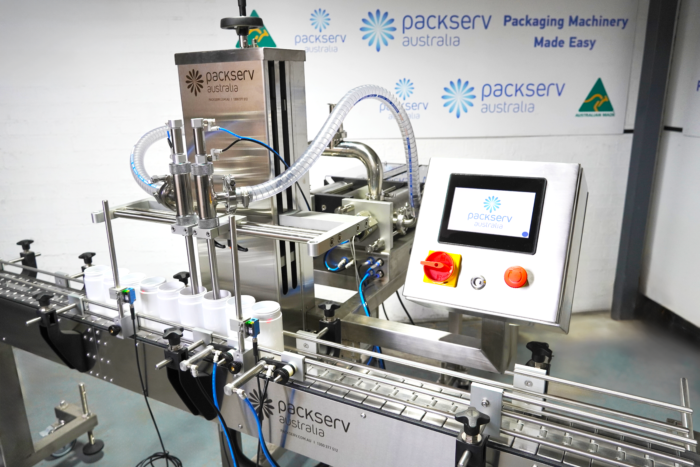
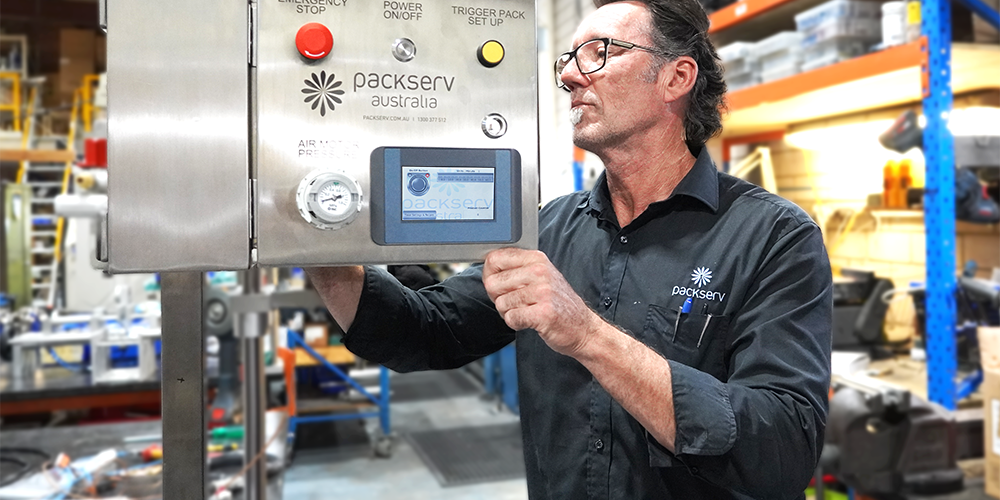
Many PLCs include an interface on the production line, which an operator programs and controls. To do this, they can type instructions directly through a keyboard or touch-screen, use a handheld device, or send information via an external computer. Programs can be stored, backed up, and copied for future use, making it easier to maintain a library for various types of products.
What are the benefits of PLCs for liquid filling?
In Australia and elsewhere, companies are investing in PLCs because they bring many benefits and can significantly enhance production. For example, PLCs reduce lead times when switching over to a new product range because operators can easily change parameters such as bottle size and filling rate and pressure. The solid-state system usually supports smoother processes than the hardwired equivalent, which can translate into higher production speed.
In addition, for the liquid filling industry, PLCs can use sensors that detect filling volume, filling level, weight, or liquid pressure, helping the machine monitor the system more accurately. It can either warn the operator or react according to its pre-programmed parameters. PLCs also generate data that is ready for analysis, allowing operators to refine production processes and timelines.
Another big advantage is that PLCs fit almost any liquid filling machine, supporting retrofitting as part of automating the production line. Finally, the systems are highly scalable, and PLCs are relatively easy to program without advanced computer programming knowledge. Overall, PLCs can make the process of integrating liquid filling machines into your production line much easier.
Examples of how PLCs are used for liquid filling
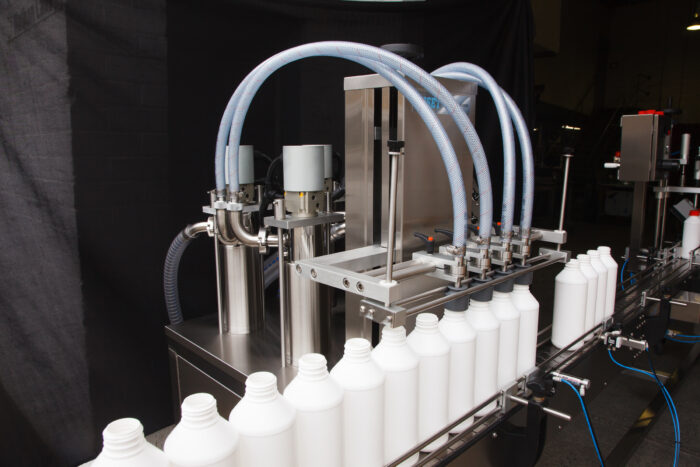
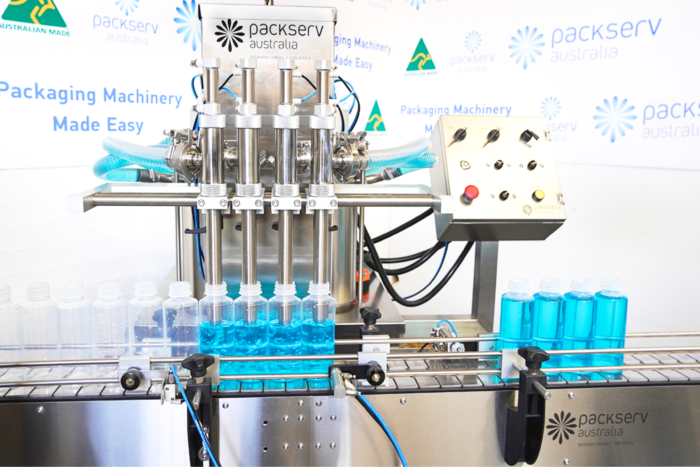
PLCs can perform many different tasks and processes on a liquid filling production line. For example, one common use is replacing pneumatic control on a liquid filling machine. Some PLCs use infrared sensors to detect that a container is present and in the correct place for filling. If there is no container present, or it isn’t in the right position, then that head does not engage the filling cycle.
Another common use is monitoring filling volumes, whether through weight or using a photo sensor to monitor the exact level. Usually, the PLC does not instruct the conveyor to engage until the system fills all containers to the correct level. This can reduce the number of under-filled bottles significantly, supporting quality control. Of course, many PLCs use multiple inputs, so the system could incorporate the bottle detection system and level fill controller.
Finally, one very simple PLC process, but one that can be very important for limited product runs, is using a counter to keep track of the number of products. Once the correct number of units passes through, the PLC stops production. For some production lines with many processes, individual PLCs are not always enough, so they take it to the next level with centralised control.
Centralised PLC control and SCADA support
For large, complex production lines, where all machines must work in unison, operators may need to monitor and operate all PLCs from a central control room. To achieve this, some plants install a wider Supervisory Control and Data Acquisition (SCADA) system that allows centralised monitoring and production control of all PLCs. These software suites use sensors and other feedback to report system conditions to the control room, where an operator can take action where needed.
SCADA systems are particularly useful for synchronising PLCs in larger production plants where it takes a lot of time to extract information from individual machines manually. Another advantage is that SCADA systems can oversee many different types of machines so a production line can have conveyors, liquid filling machines, capping machines, and labelling systems working in unison. This means that an operator or automatic system can lower or raise production speed across the entire factory.
Another advantage of SCADA is that the operator can troubleshoot quickly, diagnose any problem and take action. Data highlights recurring issues and supports preventative maintenance and adjusting processes, making PLCs and SCADA an excellent option for packaging quality control.
Packserv and PLC systems
PLCs are a useful way to add extra automation to your production line, making them more efficient without compromising product quality. They support quick changeovers and are relatively simple to use and program through intuitive HMIs and external devices. That’s why an increasing number of industry sectors that rely on liquid filling machines are embracing PLC technology, even for smaller production lines.
If you want to add automation to your line, Packserv understands your needs and can help you benefit from PLC technology. To find out more, contact Packserv and speak to one of their experienced technicians.